For decades, epoxy has been the go-to floor coating for garages, basements, and commercial spaces. In recent years, however, polyaspartic floor coatings have emerged as a faster-curing and more durable alternative with greater UV stability. Both technologies can deliver strong, attractive floors, but the right choice depends on your goals and expectations.
Let’s break down the basic differences between epoxy versus polyaspartic performance, cost, and longevity to help you make the most informed decision in 2026 and beyond.
Understanding the Two Technologies
What Is Epoxy Flooring?
Epoxy is a two-resin system that combines a resin and hardener to form a chemical bond as it cures. After mixing and application, it creates a dense, glossy surface well-known for its strength and professional appearance. Epoxy is popular in industrial and residential settings for its reliability and affordability. It withstands heavy use in spaces like garages or basements.
There’s a trade-off, though. Each layer of epoxy flooring typically requires an overnight cure, where full strength isn’t achieved for three to five days. That’s fine in a warehouse or climate-controlled basement, but it’s less ideal for homeowners who want garage access quickly.
Despite these limitations, epoxy is the industry standard for durability and cost-effectiveness.
What Is Polyaspartic Flooring?
Polyaspartic coatings are a newer generation of hybrid polyurea technology that’s been developed to overcome epoxy’s biggest weaknesses. Originally developed in the early 2000s, polyaspartic chemistry allows coatings to cure in just two to four hours, not days.
This rapid cure time has become a game-changer for contractors and homeowners. Polyaspartic floors can often be installed and fully cured within a single day, which minimizes disruption and downtime. They’re also fully UV-stable and don’t yellow or fade under sunlight. Finally, polyaspartic systems offer superior chemical and abrasion resistance.
While it requires a bit more skill to apply, polyaspartic systems represent the leading edge of professional-grade flooring performance.
Head-to-Head Comparison: Epoxy vs. Polyaspartic
| Category | Epoxy | Polyaspartic |
|---|---|---|
| Cure Time | 24–72 hours | 2–4 hours |
| UV Resistance | Can yellow/fade | Fully UV stable |
| Durability | High impact strength, less flexible | More flexible, crack-resistant |
| Application Temp Range | 55–85°F | -20–120°F |
| Thickness | Typically 10–20 mils | 8–15 mils |
| Lifespan | 5–10 years | 10–15 years |
| Maintenance | May need recoating | Minimal maintenance |
| Ideal use | Indoor spaces | Indoor + outdoor |
Performance Insights
Durability and Wear Resistance
Epoxy floors are extremely strong but rigid. If the concrete beneath expands, contracts, or shifts, the coating can chip or crack. Polyaspartic floors maintain their flexibility after curing. They can absorb impacts and resist cracking under movement. Both systems stand up well to abrasion, but polyaspartic coatings typically offer higher tensile strength, which translates to longer wear life.
UV and Chemical Resistance
Epoxy’s main weakness is sunlight. Over time, UV exposure can break down epoxy’s molecular bonds (a process called photodegradation), causing the surface to yellow or chalk. In contrast, polyaspartic coatings are UV-stable, maintaining their original color and gloss after years of exposure.
Both systems resist automotive fluids like oil and gasoline, but polyaspartic coatings withstand aggressive chemicals like brake fluid or antifreeze without staining or softening. That’s a big advantage for garages with windows or patios and driveways.
Cure Time and Workflow Efficiency
Installing epoxy requires multiple days: one for prep, one for a base coat, another for topcoat, and a full day or more for curing. During that time, vehicles must stay outside, and foot traffic is limited. Polyaspartic coatings flip that timeline; with a two-to four-hour cure, many installations can be completed in a single day.
Aesthetic and Design Options
Color and Gloss Retention
Epoxy and polyaspartic floors both achieve the coveted “showroom shine,” but over time, the former can lose its gloss and amber in sunlight. Polyaspartic coatings keep their gloss and vibrant color for years, maintaining that newer, cleaner appearance. In addition, you can customize both to different gloss levels (high-gloss, satin, or matte), but polyaspartic surfaces typically require less maintenance.
Decorative Flakes and Finishes
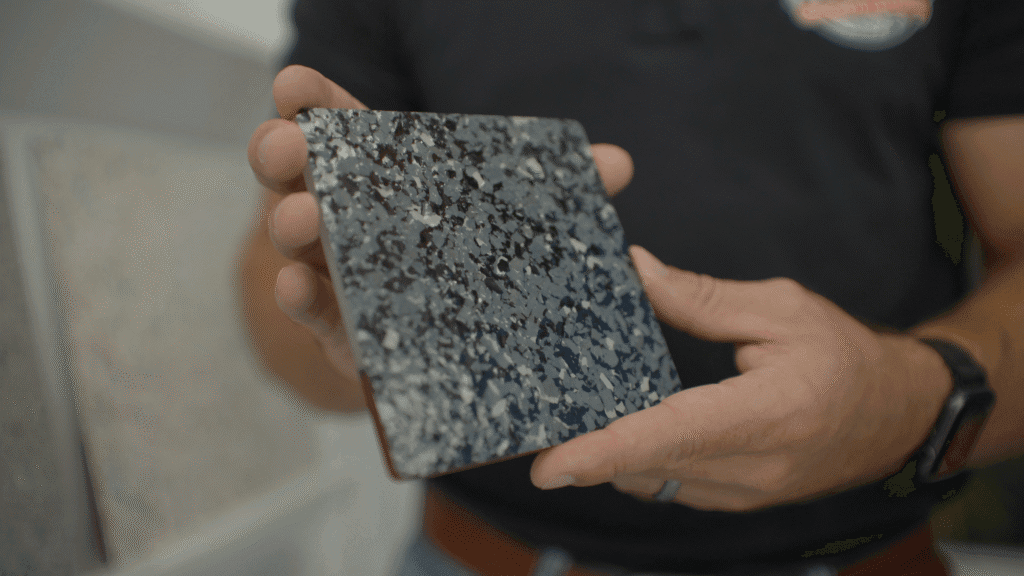
Polyaspartic and epoxy support the same range of decorative options. You can embed custom flakes, quartz, or metallic effects. Epoxy gives installers more working time to distribute the flakes evenly, but the fast cure of a polyaspartic floor demands efficiency. That can also result in a more uniform, durable surface with stronger flake adhesion.
Longevity and Cost Considerations
Installation Cost
Epoxy materials generally cost less per gallon, but the labor takes longer because of the extended curing time. Polyaspartic coatings are 20–40% more expensive, but their faster installation and longer lifespan offset the difference. Quality surface preparation—grinding, cleaning, and crack repair—costs the same, so the decision often comes down to priorities: upfront savings or long-term value.
Long-Term ROI
Polyaspartic flooring nearly always wins when you calculate the cost per year of ownership. Epoxy floors can last seven to ten years, while polyaspartic systems can exceed 15 or 20 years with minimal maintenance. That means fewer repairs, reduced downtime, and higher homeowner satisfaction. It’s why many installers and homeowners view polyaspartic as the smarter investment.
Choosing the Right Coating for Your Space
Choose epoxy for budget-conscious, indoor projects where time isn’t critical. It works well in basements and low-traffic commercial spaces. Polyaspartic, meanwhile, is great for garages, patios, or any UV-exposed area where durability and longevity matter most. It’s also the right choice for clients valuing long-term performance and minimal disruption.
The Future of Floor Coatings
The flooring industry has shifted and will continue to move to polyaspartic floor systems. Contractors appreciate faster installs and fewer callbacks. Customer satisfaction plays a role, too, as these materials offer low-odor, fast-curing options that look beautiful for decades.
FloorTek is leading the evolution of flooring with next-generation coatings that improve UV, chemical, and adhesion performance. Formulas will continue to advance and application techniques will become more refined, making polyastartic the standard, not the premium solution. Epoxy, meanwhile, will remain a dependable option for specific controlled environments.
Frequently Asked Questions
Is polyaspartic worth the extra cost?
Yes. Its longevity, UV stability, and same-day installation make it a far better long-term investment than epoxy.
Can I apply polyaspartic over old epoxy?
If the existing surface is properly prepped and adhesion-tested, polyaspartic can be applied directly over epoxy.
Is epoxy obsolete?
Not at all. Epoxy still serves a purpose in controlled indoor environments—but for most modern applications, polyaspartic coatings now lead the way.